Carpenter ants are a common problem in Fayetteville, Arkansas—especially in the spring and summer. They are often more active after heavy rain. They are attracted to damp wood, landscaped areas and old rotting stumps. While carpenter ants don’t eat wood like termites do, they can still cause serious structural damage by tunneling through it to build their nests.
If you’ve found carpenter ants in your home, it’s important to act quickly. In this complete step-by-step guide, you’ll learn how to get rid of carpenter ants safely and effectively. We’ll cover how to identify carpenter ants, recognize the signs of an infestation, locate nests, and take the right steps to eliminate them.
You’ll also learn how to prevent carpenter ants from coming back—and when it’s time to call for professional carpenter ant extermination in Fayetteville, AR. If the problem becomes too large to handle on your own, Rid-a-Pest is here to help with expert solutions you can trust.
What Are Carpenter Ants?
Carpenter ants are large ants that excavate smooth tunnels in wood to create their nests. They are especially attracted to moist or decaying wood, but once a colony is established, carpenter ants can expand into sound, healthy wood and spread throughout your home.
Unlike termites, carpenter ants do not eat wood. Instead, they remove wood fibers as they tunnel, leaving behind sawdust-like material called frass. Another key difference is that carpenter ants do not build mud tubes, which helps distinguish them from termites.
In Northwest Arkansas, moisture is one of the biggest factors that attracts carpenter ants. Issues like leaky windows, poor drainage, damp basements, and plumbing leaks create the ideal environment for infestations. Addressing these moisture problems is just as important as eliminating carpenter ants to prevent them from returning.
What Do Carpenter Ants Look Like?
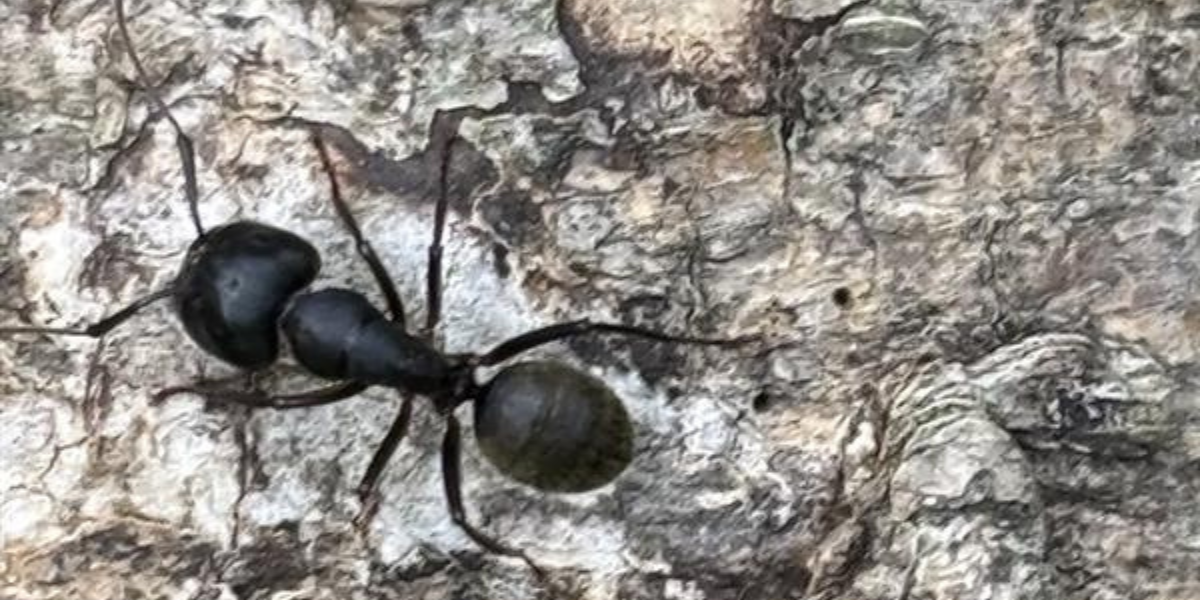
Homeowners often notice carpenter ants because they are much larger than typical household ants. They are usually black, dark brown, or reddish-black, and workers within the same colony can vary in size. As the colony matures, you may also begin to see winged carpenter ants (swarmers), which are a sign of a growing infestation.
You can identify carpenter ants by their appearance, behavior, and where they are found:
- Larger than the average household ant
- Black, dark brown, or reddish-black in color
- Different-sized workers within the same colony
- Winged ants may appear once the colony reaches maturity
Their activity and location also provide important clues:
- Small ants near food crumbs are typically not carpenter ants
- Large ants found near moisture, window frames, or wall openings are more likely to be carpenter ants
- Seeing winged carpenter ants inside your Fayetteville home may indicate a nearby colony that needs attention
If you’re noticing these signs indoors, it’s important to investigate further. Carpenter ants can cause increasing damage over time if the infestation is left untreated.
Signs of a Carpenter Ant Infestation
1. Sawdust-Like Frass and Where It Collects
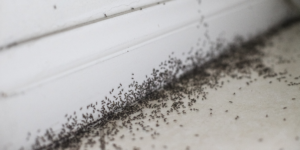
One of the clearest signs of carpenter ants is frass that looks like sawdust, sometimes mixed with small insect parts. This material is pushed out as carpenter ants expand their tunnels.
You’ll often find frass in areas such as:
- Beneath baseboards
- Under window trim
- Around door frames
- In garage corners
- Below walls where ants may be nesting
2. Rustling Sounds in Walls or Ceilings (Especially at Night)
When the infestation is heavy enough, some homeowners notice faint rustling, tapping, or crinkling sounds coming from walls, ceilings, or trim.
These sounds are typically more noticeable at night when the home is quiet and carpenter ant activity increases. While not definitive on its own, this sign becomes more significant when combined with visible frass or repeated ant sightings.
3. Ant Trails, Worker Activity, and Travel Patterns
Carpenter ants often travel along consistent paths as they search for food and expand their colony.
Common travel routes include:
- Utility lines and plumbing penetrations
- Foundation edges
- Tree branches touching the roofline
- Baseboards and flooring edges indoors
- Pipes under sinks
If you can track where carpenter ants are coming from and where they are going, you’re getting closer to locating the nest.
4. Moisture Damage That Attracts Carpenter Ants
Carpenter ants are strongly attracted to moisture-damaged wood. Infestations are often linked to issues such as:
- Slow plumbing leaks
- Crawl space condensation
- Clogged gutters directing water toward the foundation
- Poorly sealed windows
Fixing the carpenter ant problem without addressing moisture can lead to repeat infestations.
5. When to Call for Carpenter Ant Extermination in Fayetteville, AR
If you notice ongoing carpenter ant activity, cannot locate the nest, see winged swarmers indoors, or suspect the colony is inside structural wood, it’s time to call a professional.
Expert carpenter ant extermination in Fayetteville, AR can help identify the infestation, locate hidden nests, and create a targeted treatment plan. Rid-a-Pest provides reliable carpenter ant control solutions designed to protect your home and prevent future problems.
How Do You Get Rid of Carpenter Ants Step by Step
If you are asking, how do you get rid of carpenter ants? The best results come from combining identification, nest location, targeted treatment, and moisture repair. Here is the step-by-step process.
Step 1: Identify the species and confirm it is carpenter ants
Before treating the problem, make sure you are dealing with carpenter ants and not termites or another ant species. If possible, collect a few ants in a sealed bag or container
Take clear photos, and note where you found them. Correct identification is important—treating the wrong pest wastes time and delays proper control.
Step 2: Find the nest (main nest vs. satellite nests)
Carpenter ants usually have a main nest outside, such as in a stump, tree, or woodpile, and smaller nests inside, such as in wall voids, under insulation, or near damp wood.
At night or in the evening, follow trails, look near water, and check places where frass gathers. If you only treat the trail you can see and not the nest, the problem can last longer.
Step 3: Fix moisture sources (leaks, damp wood, drainage)
This is where a lot of DIY attempts go wrong. Fix leaking pipes, leaks in the roof or windows, drainage problems that lead water away from the foundation, and too much moisture in the crawl space.
Making the area dry helps your treatments work better and lowers the risk of getting sick again.
Step 4: Clean up attractants (food, grease, pet bowls, trash)
Ants that live in wood will also look for food. When you can, clean up crumbs and grease, store pantry items in airtight containers, rinse recyclables, and keep pet food sealed.
This makes it less likely that animals will find food and makes baiting more reliable.
Step 5: Use bait correctly (where to place it and what to avoid)
Baits can work well when used correctly. Place bait stations along active trails and near entry points, but do not spray repellent insecticides directly on the trail you want them to feed from.
Repellents can cause the ants to avoid the bait and split their activity into new paths. Be patient, because baits take time to circulate through the colony.
Step 6: Treat entry points and exterior activity safely
After you start baiting, you can look for possible entry points for outsiders, such as cracks, gaps in utility lines, and openings in foundations.
Treatments should be specific, and you should follow the directions on the label. To make it even harder to reach your house, limit contact points that serve as bridges and trim plants back from the house.
Step 7: Monitor progress and know when the problem is solved
For one to two weeks, keep an eye out for decreased activity and look for fresh frass piles. Reduced trail activity and fewer sightings are typically indicators of progress.
Activity may indicate satellite nests or an unattended primary nest if it persists or moves to other locations.
When DIY methods stop working, professional carpenter ant control is required.
If you are unable to locate the nest, if activity continues after multiple attempts, or if you suspect structural involvement, professional ant control is the better option.
This also applies to complex moisture issues, including crawl space problems, hidden leaks, or persistent water intrusion. An expert can combine inspection, targeted treatment, and preventive recommendations into a single strategy.
If you’re still not sure how to get rid of carpenter ants, Rid a Pest Team can help with ant control
Actionable Steps to Eliminate Carpenter Ants
It’s important to know how do you get rid of carpenter ants after finding carpenter ants in your home.
What to do today (first 24 hours)
Start with quick actions that improve your odds right away:
- Take photos of ants, frass, and any damaged wood
- Note the time and location of activity, especially at night
- Place bait on active trails where pets and kids cannot access it
- Reduce moisture fast where possible (wipe up leaks, run fans, use a dehumidifier in damp areas)
If you want an expert to confirm what you are seeing, the Rid a Pest Team can help you quickly move from suspicion to a clear plan.
What to do this week (follow-up actions)
During the following several days:
- Examine potential nesting areas, such as garage corners, window frames, door trim, crawl space edges, and attic leaks.
- Resolve gutter and drainage issues that cause dampness in areas.
- Remove plants and tree limbs from the edges of the roof and siding.
- Verify the bait’s positioning again and refresh if necessary.
This combination frequently provides a long-lasting solution to the problem of how to get rid of carpenter ants.
What to track (photos, locations, times, weather)
Tracking enables you to identify trends:
- Where ants are visible and where they vanish behind trim or walls
- When there is more activity (at night, following a downpour, following temperature fluctuations)
- Whether a single place or several rooms are the focus of activities
How to Prevent and Control Carpenter Ants Long Term
Carpenter Ant Prevention Tips for Fayetteville Homes
Preventing carpenter ants is just as important as eliminating them. These steps help reduce the risk of future infestations and support long-term carpenter ant control.
- Seal openings and cracks near utility lines, windows, and doors.
Close gaps on the outside and repair damaged weather stripping. This promotes long-term carpenter ant management and lessens new entry points.
- Use dehumidifiers, ventilation, and crawl space maintenance to keep wood dry.
Dry wood is not as appealing. Enhance ventilation, deal with moisture in crawl spaces, and promptly repair leaks. Crawl spaces and older window rooms are common sources of moisture.
- Trim vegetation and reduce ant bridges to the home.
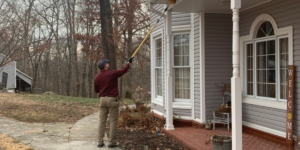
Branches touching the house, stacked items against the siding, and dense landscaping can give ants easy access. Maintain a small clearance where possible.
- Store firewood properly and remove rotting stumps.
Store firewood off the ground and away from the home. Remove rotting stumps and wood debris in the yard, because they are common nesting sites for wood-nesting ants.
- Routine inspections for Fayetteville, AR homes
If your home has had past issues or moisture risks, a routine inspection can prevent a surprise infestation. Many homeowners schedule seasonal checks, especially after wet periods.
Professional Carpenter Ant Extermination in Fayetteville, AR
If you need reliable results, Rid a Pest Team offers carpenter ant control services focused on both elimination and prevention.
The approach starts with a careful inspection to confirm the pest, identify likely nesting zones (including wall voids and moisture-damaged areas), and determine how the ants are getting in.
From there, you can expect a treatment plan based on your home’s conditions, not a generic spray-only approach.
If you want to get rid of carpenter ants and want a clear, local solution in Fayetteville, schedule an inspection with Rid a Pest Team and get practical next steps for your situation.
FAQs
Q:1 How to get rid of carpenter ants fast?
A: Fast relief from carpenter ants starts with reducing visible activity using properly placed bait and addressing moisture issues that support the colony. Eliminating damp conditions helps make treatments more effective and lessens the chance of reinfestation.
For the fastest and most reliable results, professional carpenter ant extermination can identify nesting areas and apply targeted treatments to eliminate the problem at its source.
Q:2 What is the best treatment for carpenter ants in a house?
A: The best way to get rid of carpenter ants is typically a combination of baiting, targeted use of non-repellent treatments, and correcting moisture issues that support the colony.
The most effective approach depends on where the carpenter ant nest is located and whether satellite nests are present. Identifying and treating all nesting areas is key to achieving long-term carpenter ant control.
Q:3 Does the presence of carpenter ants mean you have rotting wood?
A: Not always, but carpenter ants are strongly attracted to damp or softened wood, which is often where infestations begin.
If you’re seeing carpenter ants, it’s important to check for hidden moisture issues—even if the wood appears sound from the outside. Addressing moisture problems is a key part of effective carpenter ant control and prevention.
Q:4 Can carpenter ants damage a home like termites?
A: Carpenter ants do not eat wood like termites, but they can still cause significant damage over time. As carpenter ants excavate galleries to build their nests, they weaken wood—especially when moisture issues are present and the colony is well established.
Addressing both the carpenter ants and the underlying moisture problem is essential to prevent ongoing structural damage.
Q:5 Where do carpenter ants nest in Fayetteville, AR homes?
A: Common carpenter ant nesting areas include damp window frames, wall voids near plumbing, moisture-prone crawl spaces, and attic areas affected by roof leaks.
They may also nest in garages or outdoors in tree stumps, woodpiles, and other decaying wood close to the home. Identifying these nesting zones is a key step in effective carpenter ant control and prevention.