
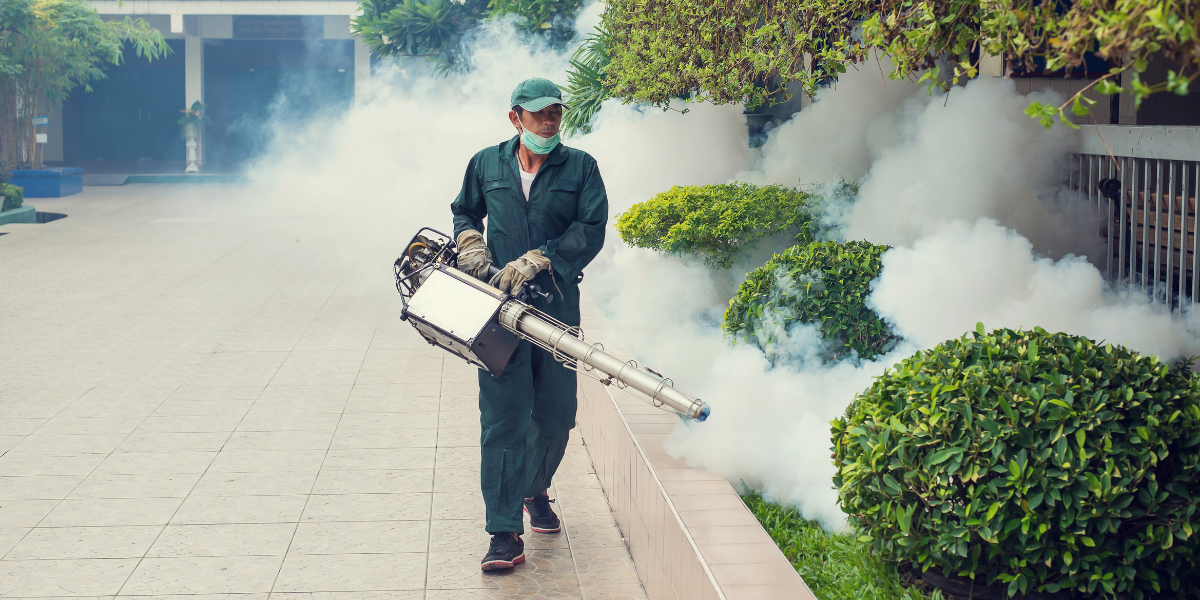
Quick Answer – Heavy rain creates more standing-water breeding sites, while warm summer conditions can speed mosquito development. In Fayetteville and Springdale, homeowners should empty or cover water-holding items each week and consider professional service when mosquito activity continues after accessible breeding sites have been removed.
If you feel like you are being eaten alive by mosquitoes every time you step outside onto your patio, recent weather may be contributing to increased mosquito activity.
Northwest Arkansas is famous for its gorgeous summer days, but this year, backyard barbecues and evening walks have turned into a battle against swarms of biting pests. While some years find our local lawns completely scorched and dried out by the Fourth of July, this summer has told a very different story.
For many homeowners, this mosquito explosion is making outdoor time feel harder to enjoy than usual.
A unique combination of unseasonably heavy rainfall and soaring summer temperatures has created a “perfect storm” for mosquito breeding across Washington County. To help you reclaim your yard, let’s look at the science behind our current local mosquito surge and identify the hidden breeding grounds right outside your door.
Need Professional Pest Control Help?
Protect your home or business with reliable pest control solutions from Rid A Pest. Contact our experts today to schedule an inspection or request a free quote.
The Perfect Storm: Heavy Rain Meets Rising Temperatures
7.1″
Rainfall Received in June
85°–95°F
Ideal Mosquito Development Temperature
200+
Eggs a Female Mosquito Can Lay
Mosquitoes need water during their immature stages, and warm conditions can speed up their development. When both are abundant, their populations grow exponentially. This summer, repeated rain and high temperatures have created favorable mosquito conditions:
1. Over 7 Inches of Rainfall in June
Usually, by early July, the summer sun has dried up the spring puddles. However, June brought historic precipitation to NWA, delivering roughly 7.1 inches of rain—nearly double our region’s historical monthly average of 3.9 inches. This relentless rain saturated our local clay soils, kept creeks full, and filled up every outdoor container imaginable with stagnant water.
2. High Heat Accelerates the Mosquito Life Cycle
As we push past the Fourth of July, daytime temperatures across Fayetteville and Springdale are consistently climbing into the low 90s, with high humidity pushing heat indexes even higher.
That summer heat is one reason the problem can feel like it escalated almost overnight.
While the standing water provides the space for mosquitoes to lay eggs, the heat acts like an accelerator. The mosquito life cycle consists of four different stages: egg, larva, pupa, and adult.
- In cooler spring weather (around 70°F), Depending on the species and temperature, development from egg to adult may take about a week or longer.
- In high summer weather (85°F to 95°F), that entire life cycle is compressed down to just 4 to 7 days.
Now, because of the July heat, those eggs may hatch and develop into adults more quickly in warm conditions. Depending on the species, a female mosquito may lay dozens or hundreds of eggs.
Key Takeaway
Heavy rainfall combined with hot summer temperatures allows mosquitoes to reproduce much faster than normal, making even small amounts of standing water a major source of infestation.
Hidden Mosquito Breeding Grounds in NWA Yards
Most homeowners in Springdale and Fayetteville know to flip over their birdbaths or empty out the dog’s water bowl. But because we’ve had so much repeated rainfall, water has collected in places you might never think to check.
Inspect Your Yard
Walk around your property after rainfall and identify areas where water collects.
Remove Standing Water
Empty containers, clean gutters, tighten tarps, and eliminate hidden breeding spots.
Protect Your Yard
Use professional mosquito treatments when breeding areas cannot be completely eliminated.
To dramatically reduce the mosquito population on your property, take a weekend walk around your yard and inspect these common local problem areas:
| Backyard Area | Why It Breeds Mosquitoes | How to Fix It |
| Clogged Gutters | Oak and maple trees drop debris that clogs gutters, trapping inches of stagnant water out of sight. | Clean your gutters completely or install gutter guards to ensure rainwater flows freely. |
| Corrugated Drain Pipes | The flexible plastic extension pipes attached to downspouts have internal ridges that hold pockets of water. | Straighten the pipes so water runs all the way out, or cap the ends with fine mesh. |
| Trampolines & Kids’ Toys | The safety pads around trampolines, plastic wagons, and sandbox lids easily collect rain pools. | Flip toys over when not in use and regularly shake out trampoline pads after a storm. |
| Planter Saucers | Plastic trays underneath potted patio plants catch excess water and retain it for weeks. | Dump the saucers 24 hours after a heavy rain, or fill them with sand so water can’t pool. |
| Boat Tarps & Grill Covers | Slack tarps covering boats, firewood, or grills create deep, hidden folds that hold gallons of water. | Pull tarps tight with bungee cords so water sheets off, or manually dump the water after it rains. |
Why DIY Mosquito Controls Are Failing This Season
| DIY Mosquito Control | Professional Mosquito Control | Result |
|---|---|---|
| Temporary sprays and foggers | Residual barrier treatments | Longer-lasting protection |
| Treats visible mosquitoes only | Targets breeding and resting areas | Breaks the mosquito life cycle |
| Requires frequent reapplication | Scheduled seasonal treatments | More consistent mosquito reduction |
When the mosquitoes get this bad, many Washington County residents turn to products from local home-improvement stores in Fayetteville or Springdale to buy foggers, candles, and bug sprays. Unfortunately, during a high-infestation year like this one, those retail solutions offer little more than temporary relief. Off-the-shelf yard sprays typically use weak, quick-breakdown chemicals that wear off after a single heavy afternoon thunderstorm. Furthermore, bug zappers and citronella candles only protect a tiny radius, they do not remove the breeding sites producing new mosquitoes.
Need Professional Pest Control Help?
Protect your home or business with reliable pest control solutions from Rid A Pest. Contact our experts today to schedule an inspection or request a free quote.
To actually make your yard livable again, you have to break the breeding cycle. That requires a two-pronged professional approach:
- Larvicide Treatments: Safely treating standing water that cannot be drained (like drainage ditches or low spots in the yard) to destroy mosquito larvae before they ever get wings.
- Residual Barrier Sprays: Treating the underside of dense foliage, shaded tree canopies, and brush where adult mosquitoes actually rest during the heat of the day.
Take Back Your Backyard This Summer
Professional mosquito treatments help reduce breeding areas and protect your outdoor spaces.
Reclaim Your NWA Backyard Today
You shouldn’t have to sprint from your car to your front door just to avoid getting bitten. While the June rains have given the local mosquito population a massive head start this July, a strategic, targeted pest management plan can reduce breeding opportunities and treat common mosquito resting areas around the property.
If you are comparing mosquito control Fayetteville options or need mosquito control services Springdale homeowners can count on, the right plan should target both standing water and resting areas.
Whether you are hosting a summer cookout near the Razorback Greenway or just trying to enjoy your backyard in Springdale, professional mosquito control and targeted mosquito control services can help make outdoor areas more comfortable.
Ready to Enjoy Your Backyard Again?
Stop mosquitoes before they take over your outdoor living space. Schedule a professional inspection today.
FAQs
1. Why are mosquitoes so bad in Fayetteville and Springdale this summer?
June rains, coupled with hot temperatures in July, have created an ideal breeding environment for mosquitoes. They lay their eggs in the standing water, and the warm weather accelerates their life cycle, resulting in a very rapid mosquito increase.
2. Where do mosquitoes commonly breed around my yard?
Mosquitoes often breed in clogged gutters, planter saucers, corrugated drain pipes, trampoline pads, children’s toys, and loose tarps that collect standing water. Even small amounts of stagnant water can make hundreds of mosquitoes.
3. How can I reduce mosquitoes around my home?
Empty, drain or cover items that collect standing water, clean gutters, tighten outdoor covers, and check your yard after heavy rain or lawn irrigation. Eliminating breeding sites is one of the best methods to decrease mosquito activity.
4. Why aren’t store-bought mosquito sprays working this year?
Most DIY mosquito sprays provide only short-term relief and can lose effectiveness after rain. They also don’t eliminate mosquito larvae, allowing new mosquitoes to continue emerging.
5. When should I consider professional mosquito control?
Although mosquito control is not a complete solution, professional mosquito control can be used if the standing water is eliminated and DIY products are used, but mosquitoes continue to return. Consider professional service when mosquitoes remain active after you have removed accessible standing water and maintained the yard. Depending on the property, a technician may recommend source reduction, treatment of suitable breeding sites with an approved larvicide, or targeted treatment of adult mosquito resting areas. No treatment can eliminate every mosquito, and results depend on weather and nearby breeding sources.