Waking up with red, itchy bites on your skin or spotting tiny bugs in your home can instantly cause panic. Two of the most common blood-feeding culprits in Arkansas homes are fleas and bed bugs.
While both of these flightless pests can cause physical discomfort, sleepless nights, and frustration, they are vastly different insects. Treating a flea problem requires a completely different approach than eradicating a bed bug infestation, so misidentifying the pest can waste valuable time and money.
Here is a clear breakdown of physical differences, bite patterns, and hiding habits to help you figure out which pest has moved into your living space.
Physical Appearance: How They Look
At first glance, both bugs appear as tiny, dark, crawling insects. However, looking closely reveals major physical differences:
- Fleas: Fleas are extremely small, usually about 1/8 of an inch long. Their bodies are reddish-brown to black and are laterally flattened, meaning they are flat from side to side like a coin standing on edge. This narrow shape allows them to glide easily through pet fur and carpet fibers. Fleas do not have wings, but their powerful hind legs allow them to jump impressive distances relative to their tiny body size.
- Bed Bugs: Adult bed bugs are larger, about the size and shape of an apple seed (around 1/4 of an inch). Their bodies are flat from top to bottom, resembling a tiny oval shield. They are reddish-brown, but after feeding, their bodies swell up, elongate, and turn a darker red color. Bed bugs do not have wings and cannot leap or fly; they can only crawl.
Need Professional Pest Control Help?
Protect your home or business with reliable pest control solutions from Rid A Pest. Contact our experts today to schedule an inspection or request a free quote.
The Bat Bug Factor: A Tricky Local Look-Alike
While distinguishing between a flea and a bed bug is fairly straightforward, another parasite makes identification much more complicated: the bat bug.
Bat bugs are near-identical cousins of the bed bug. To the naked eye, they share the exact same oval shape, reddish-brown color, and size. The primary physical difference is microscopic: bat bugs have longer fringe hairs on the upper border of their prothorax (the region directly behind the head). Because these two species look so similar, it often requires a trained pest professional or an entomologist using a microscope to tell them apart.
This distinction can be particularly relevant in areas of Northwest Arkansas where bats may roost in attics, chimneys, and other parts of homes. When a bat colony roots in a home, bat bugs feed on the bats. However, if the bats leave or are excluded from the attic, hungry bat bugs will crawl down through ceiling fixtures, wall voids, and baseboards into living spaces, biting human occupants just like bed bugs.
Treating bat bugs requires addressing the underlying bat infestation and performing wildlife exclusion, whereas standard bed bug treatments focus strictly on human living areas.
Bite Patterns: How and Where They Bite
Both fleas and bed bugs leave red, itchy welts, but the location and layout of the bites offer major clues:
- Flea Bites: Flea bites usually target the lower body, particularly around ankles, feet, calves, and lower legs. The bites generally appear as small, red bumps with a dark halo or central point. Because fleas jump up from floors and carpets, they bite skin that is easily accessible near ground level.
- Bed Bug Bites: Bed bugs feed on exposed skin while you sleep. Their bites most commonly appear on the upper body, including arms, shoulders, neck, face, and hands. Bed bug bites may sometimes appear in lines or small clusters, although bite patterns vary from person to person and cannot reliably confirm a bed bug infestation.
Need Professional Pest Control Help?
Protect your home or business with reliable pest control solutions from Rid A Pest. Contact our experts today to schedule an inspection or request a free quote.
Hiding Spots and Behavior
Where you find evidence of the pests in your home is often the clearest indicator of which bug you are dealing with:
- Flea Evidence: Fleas are heavily tied to pets and flooring. You will usually spot adult fleas jumping around pet bedding, living room rugs, upholstery, or directly on your dog or cat. A classic sign of fleas is “flea dirt,” which looks like small specks of black pepper sprinkled on pet fur or carpet. If you wipe these specks with a wet paper towel and they turn red, it is digested blood from fleas.
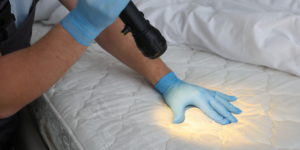
- Bed Bug Evidence: Bed bugs avoid light and prefer tight, dark crevices near where people sleep or rest. Look closely at mattress seams, box spring corners, bed frames, headboards, and behind baseboards. Instead of flea dirt, bed bugs leave behind dark, rusty smears of fecal staining on bed sheets, translucent shed skins, and tiny, pale white eggs stuck inside fabric folds.
Treatment Differences: Why Professional ID Matters
Mistaking one pest for another leads to failed DIY attempts and continued frustration. Flea treatments must address both the home and the pet simultaneously. Bed bug treatments require specialized heat or targeted chemical applications in sleeping areas. Bat bug infestations demand attic wildlife management alongside pest control. If you are finding bite marks or spotting crawling insects in your home, getting an expert identification from a pest professional ensures you solve the actual root cause of the problem safely and effectively.
Not Sure Whether You Have Fleas or Bed Bugs?
Get professional pest identification and find the right treatment for your home.
Quick Comparison: Fleas vs. Bed Bugs
| Feature | Fleas | Bed Bugs |
|---|---|---|
| Size | About 1/8 inch | About 1/4 inch |
| Body Shape | Flattened from side to side | Flat from top to bottom |
| Movement | Jumps | Crawls |
| Common Biting Areas | Feet, ankles, calves, lower legs | Arms, shoulders, neck, face, hands |
| Common Hiding Areas | Carpets, rugs, upholstery, pet bedding | Mattress seams, box springs, bed frames, headboards |
| Common Evidence | Flea dirt, jumping insects, pet infestation | Fecal stains, shed skins, eggs, live bugs |
Can You Have Fleas and Bed Bugs at the Same Time?
Yes. Although fleas and bed bugs are completely different pests, it is possible for a home to have both at the same time. This can make identifying the source of bites especially difficult. Fleas are often introduced by pets or wildlife and tend to remain around carpets, furniture, pet bedding, and other areas where animals spend time. Bed bugs, on the other hand, are commonly transported into homes through luggage, clothing, used furniture, and other personal belongings.
If you are seeing insects in multiple areas of your home or experiencing unexplained bites, avoid assuming that every bite comes from the same pest. A professional inspection can assist in determining whether you are dealing with fleas, bed bugs, or another biting insect.
Need Professional Pest Control Help?
Protect your home or business with reliable pest control solutions from Rid A Pest. Contact our experts today to schedule an inspection or request a free quote.
Can Fleas and Bed Bugs Live in Your Bed?
Fleas can be found in beds, particularly when pets regularly sleep there. However, fleas generally prefer areas where pets rest and spend time, including pet bedding, carpets, and upholstered furniture.
Bed bugs are much more closely associated with beds and sleeping areas. They commonly hide in mattress seams, box springs, bed frames, headboards, and nearby cracks and crevices. Finding insects or evidence around these areas can be an important clue, but visual identification is still the best way to determine the pest.
Can You Identify Fleas or Bed Bugs by Their Bites?
Not reliably. Flea and bed bug bites can both cause itchy, red bumps, and people’s reactions can vary significantly. The location and pattern of bites may provide clues, but they should not be used as the only method of identification. If you suspect an infestation, look for physical evidence such as flea dirt, shed skins, fecal spots, eggs, or live insects. When possible, have the pest professionally identified before choosing a treatment method.
Frequently Asked Questions
How can you tell if bites are from fleas or bed bugs?
Flea bites commonly occur around the ankles, feet, and lower legs, while bed bug bites often appear on sensitive skin such as the arms, neck, shoulders, and face. However, bites alone cannot reliably identify the pest. Look for additional evidence and consider professional identification.
Do fleas live in beds?
Fleas can live in bedding, especially when pets regularly sleep there. They are also commonly found in carpets, rugs, upholstery, and other areas where pets spend time.
Can bed bugs jump like fleas?
No. Bed bugs cannot jump or fly. They move by crawling, while fleas use their powerful hind legs to jump between hosts and surfaces.
What is the biggest difference between fleas and bed bugs?
The biggest differences are their body shape, movement, and preferred hiding areas. Fleas are smaller, laterally flattened, and capable of jumping, while bed bugs are larger, oval-shaped, crawl-only insects that commonly hide around sleeping areas.
How do you know if you need professional pest control?
If you continue finding insects, bites, flea dirt, bed bug stains, shed skins, or other signs despite cleaning or DIY treatment, professional pest control can help identify the pest and determine the appropriate treatment approach.