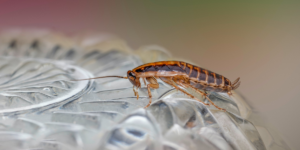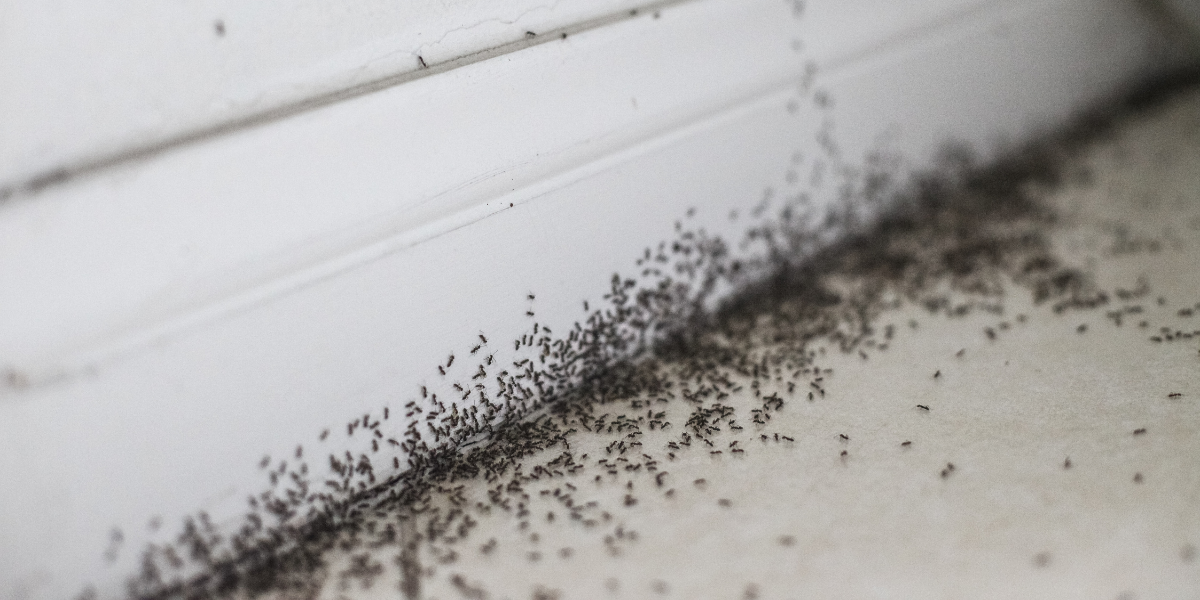
Finding a path of ants marching across your kitchen counter is practically a summer rite of passage for homeowners in Northwest Arkansas. You wipe them away, spray a little cleaner, and think you’ve solved the problem, only to find twice as many invading your bathroom sink the very next morning.
During a high-moisture summer like this one, ant activity across Washington County hits an absolute peak. While the heavy rains earlier in the season flooded their underground nests, the intense July heatwaves are now baking our local clay soils dry.
Key Takeaway
Replace this with your most important takeaway.
When their natural outdoor environment becomes too extreme, ant colonies look for two things to survive: reliable moisture and easy food. Unfortunately, the average home in Fayetteville or Springdale provides the perfect climate-controlled oasis.
Let’s dive into why local ant populations are invading our spaces right now, how to identify the most destructive local species, and the common mistakes to avoid when fighting them.
Know Your Invaders: Common Ants in Northwest Arkansas
Not all ants are created equal. Some are simply a nuisance looking for dropped sugar crystals, while others can cause thousands of dollars in structural damage to your property. Understanding which species has moved into your home is crucial for effective eradication:
| Ant Species | Visual Appearance | Behavior & Nesting Habits | Damage Risk |
| Odorous House Ants (Sugar Ants) | Very small (about 1/8 inch), dark brown or black. They emit a rotten coconut smell when crushed. | They nest in wall voids, insulation, and beneath large landscaping rocks or mulch beds near the foundation. | Low structural risk, but they reproduce rapidly and contaminate open food sources on countertops. |
| Carpenter Ants | Distinctly large (up to 1/2 inch), solid black or dark red. They have a evenly rounded thorax. | They prefer damp, soft wood. They chew smooth galleries through home framing, window sills, and deck joints. | High structural risk. Over time, their tunneling can severely compromise the wooden support structures of your home. |
| Fire Ants | Small to medium-sized, reddish-brown to bright red bodies with a darker abdomen. | They build visible, loose dirt mounds in open yards, along concrete driveways, and near patio slabs. | High health risk. They are aggressively protective of their mounds and inflict painful, venomous stings that blister. |
| Little Black Ants | Tiny (about 1/16 inch), jet black. | They nest in wall voids, decaying wood, or under stones and debris near foundations. | Low structural risk, but they are persistent scavengers that can contaminate food supplies. |
The “Budding” Effect: Why DIY Sprays Make Ant Problems Worse
Warning: When most homeowners spot a line of sugar ants along their baseboards, their immediate instinct is to grab a can of retail bug spray from the store. While this might provide the instant satisfaction of clearing out the visible ants, it almost always guarantees a worse infestation a few weeks down the road.
| Comparison | DIY Spray | Professional Ant Treatment |
|---|---|---|
| Targets Colony |
✕
No |
✓
Yes |
| Kills Queen |
✕
No |
✓
Yes |
| Long-Term Results | Temporary | Long-lasting |
Ant colonies are incredibly smart survival systems governed by chemical signals. Ants like Pharaoh ants and Odorous House ants use a defense mechanism called budding.
When most homeowners spot a line of sugar ants along their baseboards, their immediate instinct is to grab a can of retail bug spray from the store. While this might provide the instant satisfaction of clearing out the visible ants, it almost always guarantees a worse infestation a few weeks down the road.
Need Professional Pest Control Help? Protect your home or business with reliable pest control solutions from Rid A Pest. Contact our experts today to schedule an inspection or request a free quote.
Ant colonies are incredibly smart survival systems governed by chemical signals. Ants like Pharaoh ants and Odorous House ants use a defense mechanism called budding.
When you spray a harsh, repellent chemical directly onto a foraging line, you sever their chemical scent trail back to the main nest. The colony senses that their workers are under attack and immediately goes into emergency survival mode.
Instead of retreating, the main colony splits up. The remaining queens take a fraction of the workers and eggs, scatter in completely opposite directions deeper into your walls, and establish multiple new satellite colonies. What started as a single localized problem in your kitchen can quickly turn into three separate infestations inside your bathrooms, pantry, and laundry room.
Practical Tips to Stop the Summer Infiltration
To keep ants from targeting your Washington County home this summer, you need to eliminate the primary attractants drawing them toward your foundation:
- Manage Your Landscaping Mulch: Thick hardwood mulch holds moisture incredibly well, making it a prime nesting site for ants right against your house. Keep mulch pulled back at least six inches from your home’s concrete foundation wall.
- Trim Branches Back: Ants are excellent climbers and frequently use overhanging tree limbs or overgrown bushes as a direct highway onto your roof, gutters, and siding. Trim back any foliage that touches your roofline.
- Seal Concrete Expansion Joints: Fire ants and pavement ants love the radiant heat trapped beneath concrete. Seal up cracks in your driveway, sidewalks, and back patio to prevent them from building massive colonies right next to your doors.
- Practice Deep Kitchen Cleaning: A few drops of juice spilled behind the trash can or leftover pet food left out in a bowl overnight acts like a homing beacon for scout ants. Wipe down surfaces regularly and store dry goods in airtight plastic containers.
Need Professional Ant Control?
Stop ants before they spread throughout your home. Schedule your FREE inspection with Rid-a-Pest today.
How Professional Baits Solve the Problem
True ant control relies on a “Trojan Horse” strategy rather than a direct frontal assault. Instead of using harsh chemical repellents that trigger colony splitting, professional pest technicians utilize slow-acting, non-repellent baits.
1
Inspect the Property
Locate entry points, nesting areas, and moisture sources.
2
Target the Colony
Apply professional bait systems instead of surface sprays.
3
Prevent Future Activity
Seal entry points and reduce food and moisture sources.
The foraging worker ants cannot detect the chemical, so they willingly eat the bait and carry it back deep into the heart of the hidden colony. Because the bait is slow-acting, the workers have plenty of time to share the meal with their larvae and, most importantly, the queens.
Once the queen is eliminated, the reproductive cycle of the entire colony collapses completely. If you are tired of playing whack-a-mole with retail sprays and want a permanent solution to your summer ant issues, a professional, targeted baiting plan is the safest and most effective path forward.
Need Professional Pest Control Help?
Protect your home or business with reliable pest control solutions from Rid A Pest. Contact our experts today to schedule an inspection or request a free quote.
Professional Ant Pest Control in Fayetteville and Springdale
When ants in the house keep returning, homeowners may search for the best pest control for ants or a professional ant killer. Effective service, however, begins with identifying the species, locating nesting areas, and understanding how the colony is entering the property.
1986
Serving Northwest Arkansas
FREE
Property Inspection
At Rid-a-Pest, we provide professional ant pest control for homes and businesses throughout Fayetteville, Springdale, and Northwest Arkansas. Our approach includes a thorough inspection, targeted treatment, strategic baiting, and practical recommendations for sealing entry points and preventing future activity.
The best ant treatment for home infestations depends on the species, nesting location, and conditions around the property. The best ant treatment for kitchen infestations also needs to address food, moisture, entry points, and the hidden colony rather than only the insects visible on counters or floors. This approach supports long-term prevention around kitchens, bathrooms, wall voids, foundations, and other common entry areas throughout the property, not just the room where visible activity appears.
Rid-a-Pest has served Northwest Arkansas since 1986 and offers free inspections and same-day availability. Whether the problem is limited to one space or has spread throughout the property, our group can create a customized ant control plan based on what is happening in your space.
Ready for targeted ant control? Call (479) 442-6880 or request a free estimate from Rid-a-Pest.